2026年6月26日,Qianhong Liu等,在《Veterinary Research Communications》发表题为“Distribution and epidemiology of brucellosis in China”的论文。
研究 要点 布鲁氏菌病是一种对全球重要的传染病,但在许多国家,其流行率、分布和影响仍然知之甚少。 中国拥有世界上最大的牲畜种群和第二大人口,其布鲁氏菌病的规模远超其他国家,是一项突出的“同一健康”(One Health)挑战。 因此,对该病的波及范围、负担及其影响的全面了解一直难以实现,而旨在降低疾病负担的协调努力也时断时续。 布鲁氏菌病在中国许多地区相对常见,感染人类以及多种牲畜和野生动物。 报告的人类布鲁氏菌病病例从2019年的45,046例增加到2023年的70,439例,反映出全国疾病负担的持续增长。 我们回顾了1950年至2025年中国布鲁氏菌病的现状,特别关注过去十年中人类和动物感染的地理分布及分子流行病学特征。 自1950年以来,人类布鲁氏菌病病例大幅且持续增加,反映出全国负担的不断加重,但也曾出现短期下降后的再度抬头。 例如,利用MLVA(多位点可变数目串联重复序列分析)和布鲁氏菌分离株的全基因组测序进行的遗传学分析已鉴定出,羊种布鲁氏菌(Brucella melitensis,特别是东地中海谱系和生物3型)是目前在中国循环的优势基因型,并将这些样本置于全球背景下。 此外,某些地区似乎是疾病的热点区域,例如内蒙古的动物发病率和人间感染率均较高。 布鲁氏菌病的分布似乎也在发生变化,从内蒙古、山西、黑龙江、河北、吉林和陕西等北方牧区和农业区,向河南、广东和福建等工业化程度较高的省份扩展,其驱动因素包括牲畜贸易、跨境传播和北方向南方的扩张。 值得注意的是,新的传播途径已经显现,这些途径与职业暴露无关。 此外,布鲁氏菌病在野生动物中的检出日益增多,可能存在跨物种传播、独特菌株以及尚未被发现的其他宿主物种。 最后,我们讨论了疫苗接种、疾病控制策略以及旨在降低中国布鲁氏菌病流行率所需的综合性动物和公共卫生措施。 疫苗接种由于缺乏效力研究而面临特殊挑战。 这些发现对防控策略具有直接影响,突显了制定区域特异性疫苗接种政策、加强非传统南方省份的监测,以及在牲畜贸易沿线进行针对性干预以对抗优势基因型GT42克隆扩增的必要性。 图文 速览
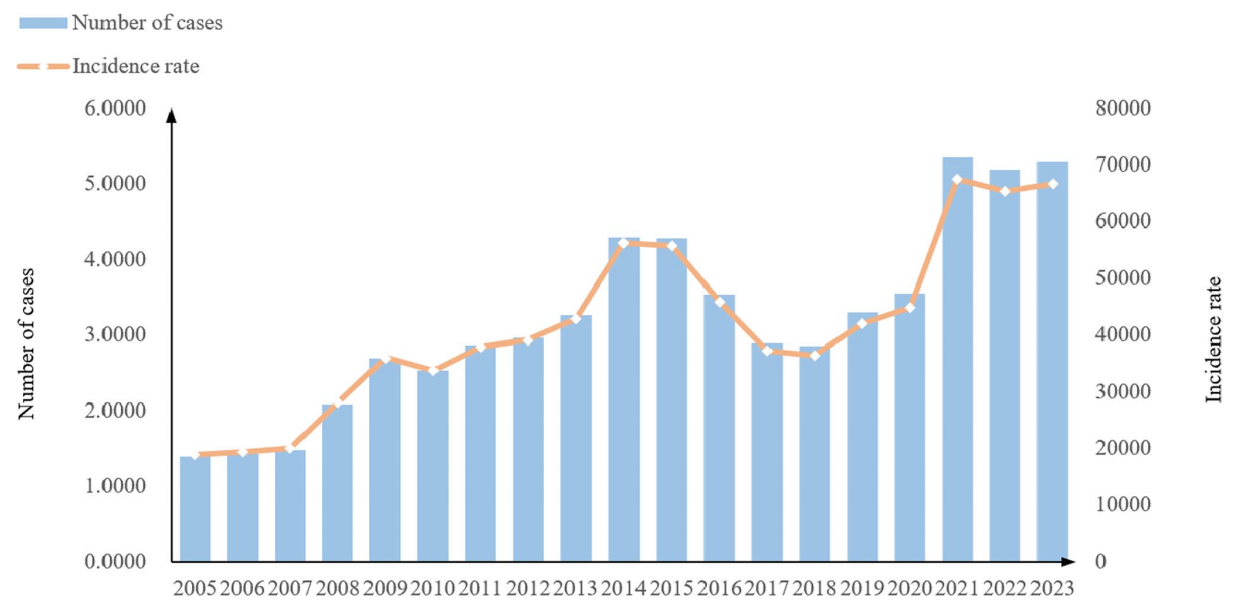
Figure 1 Aggregate number of cases (blue bars) and annual incidence rate (red line) per 100,000 residents, 2005–2023. The data are from the Chinese CDC database
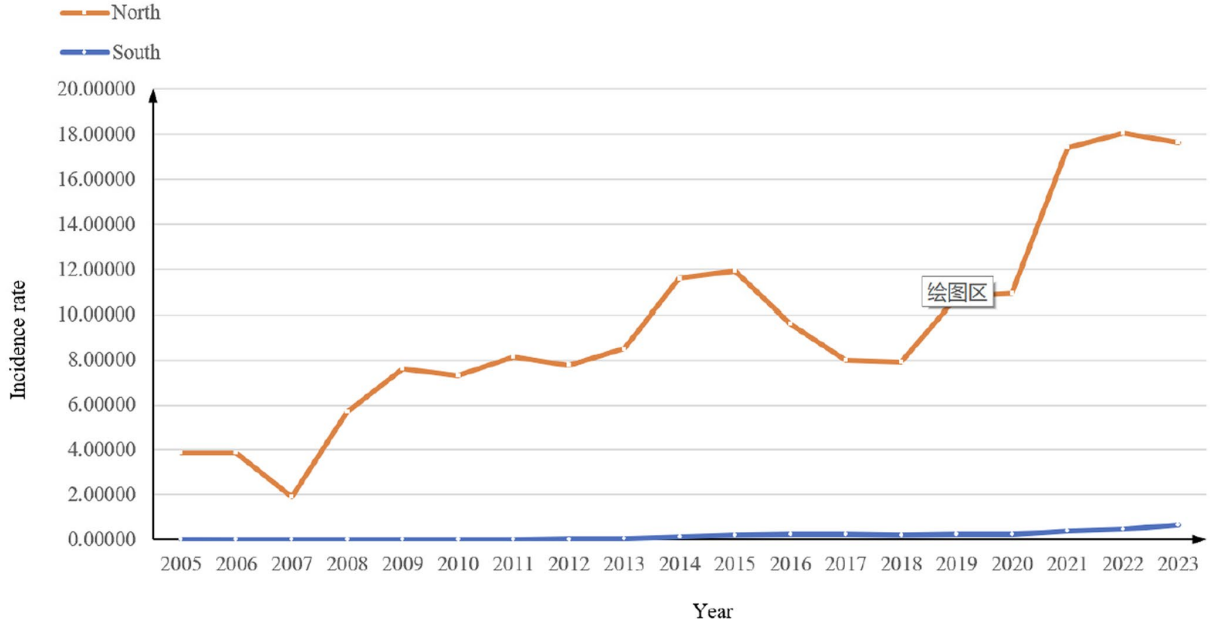
Figure 2 Brucellosis incidence rates (1/100,000) in Northern and Southern China from 2005 to 2023. The data are from the Chinese CDC database
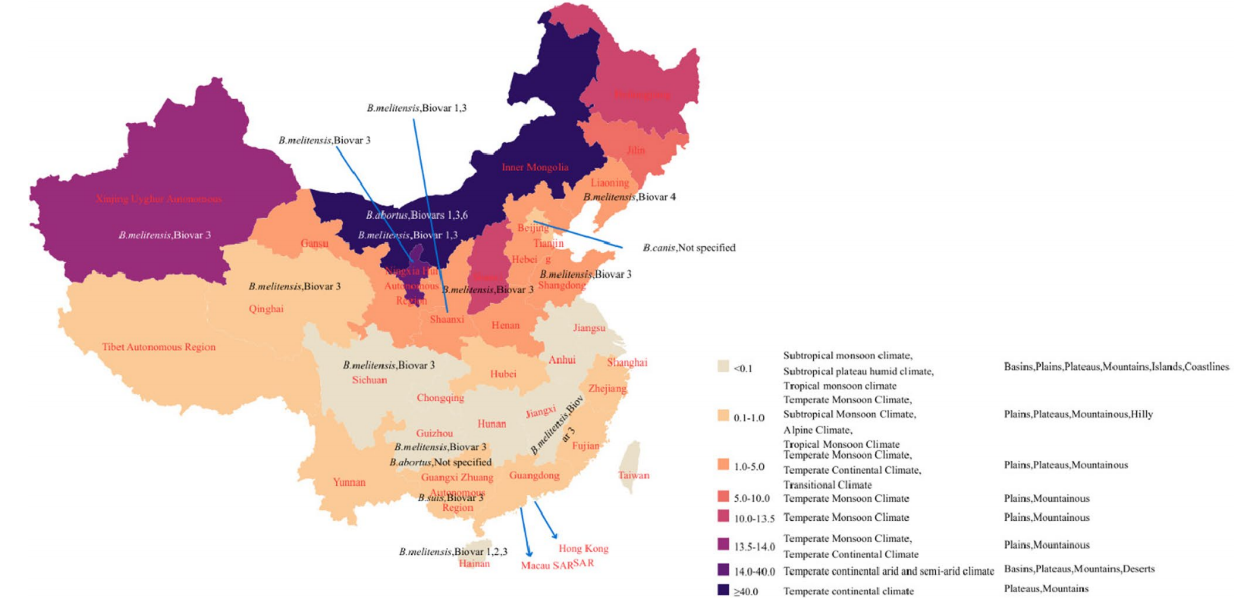
Figure 3 Map of the brucellosis epidemiological profile and climate in Chinese provinces, 2005–2023. The data are from the Chinese CDC database
Figure 4 Seasonal distribution profile of human brucellosis cases in China from 2005 to 2023. The data are from the Chinese CDC database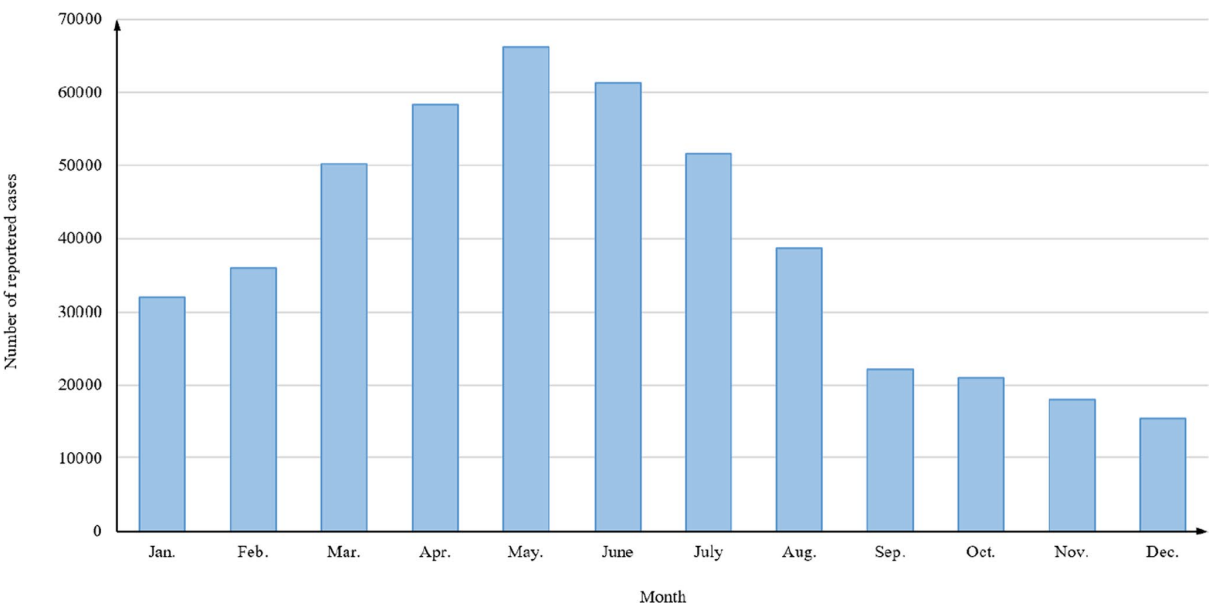
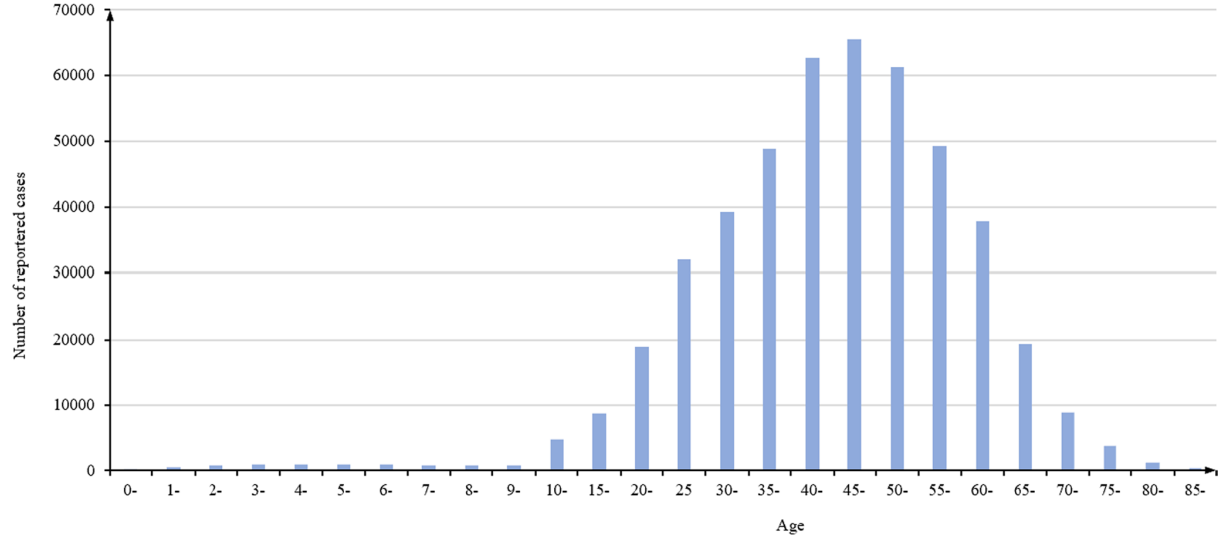
Figure 5 Age distribution profile of human brucellosis in China from 2005 to 2023. The data are from the Chinese CDC database
Table 1 Core risk factors and drivers for human brucellosis in China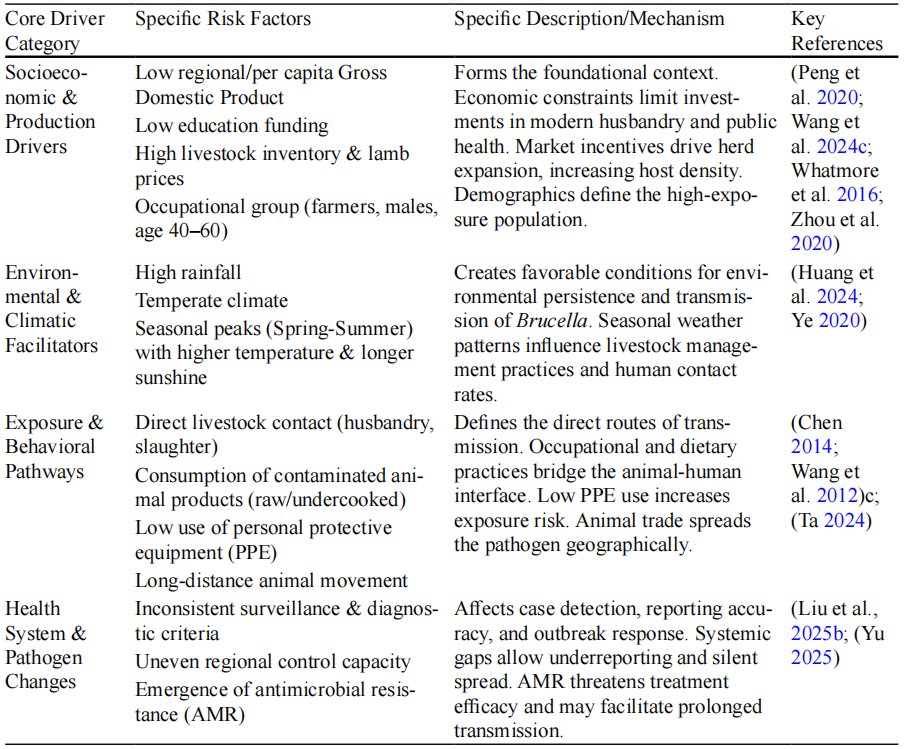
Figure 6 The total number of outbreaks and cases of livestock brucellosis in China from 2006 to 2021. The data are from the Chinese CDC database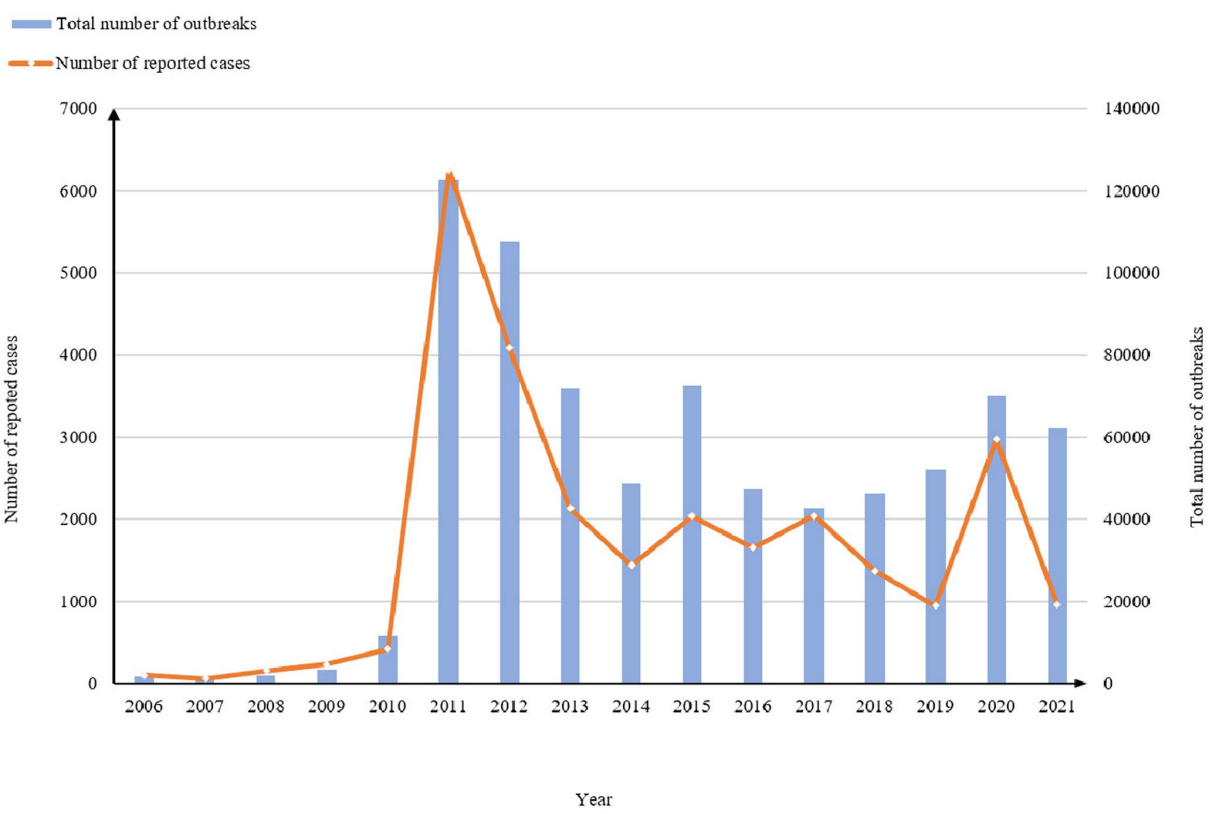
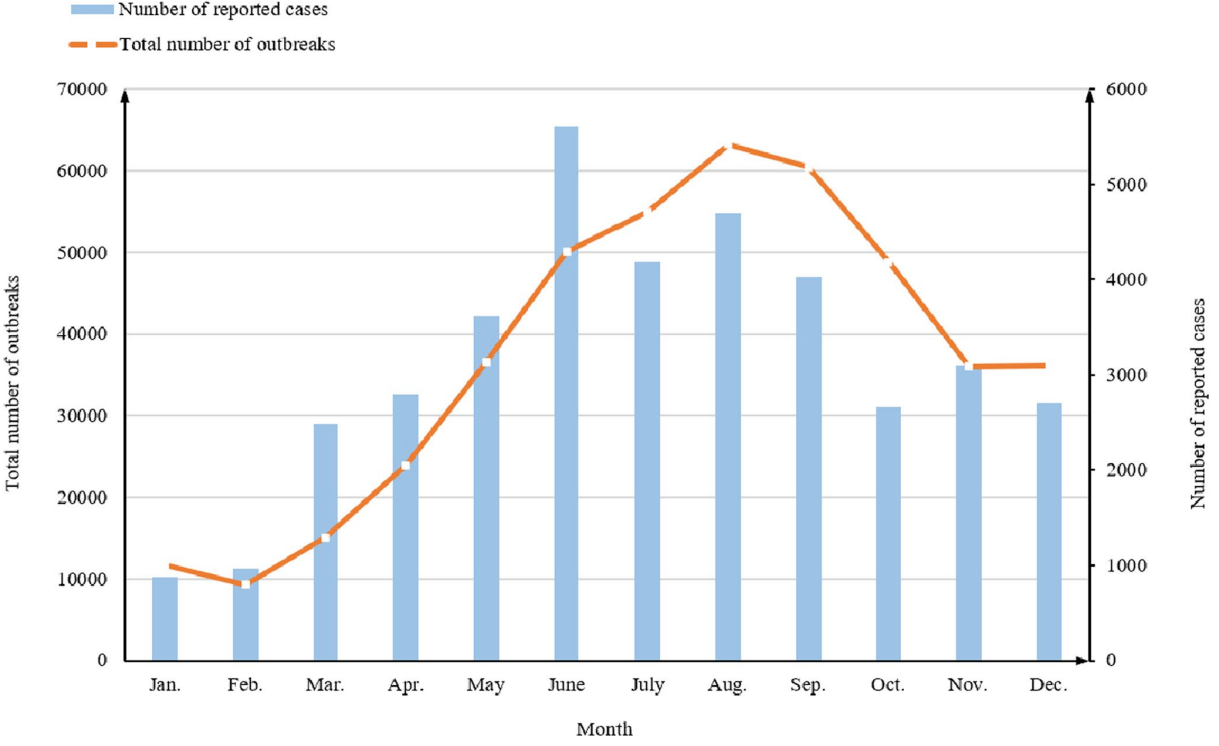
Figure 7 Seasonal distribution profile of livestock brucellosis in China from 2006 to 2021. The data are from the Chinese CDC database (
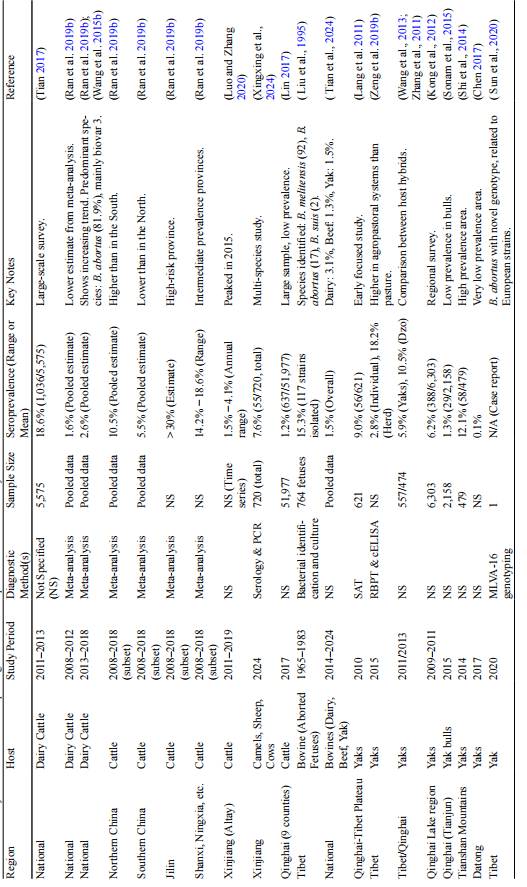
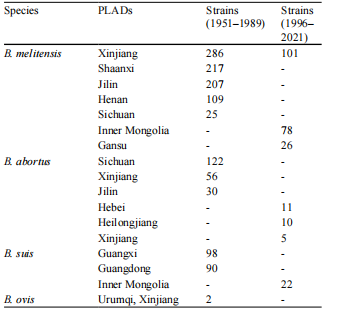
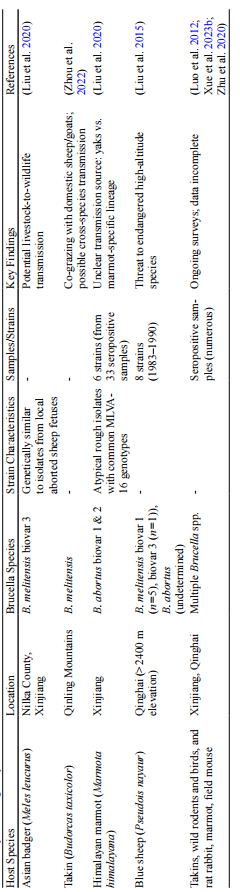
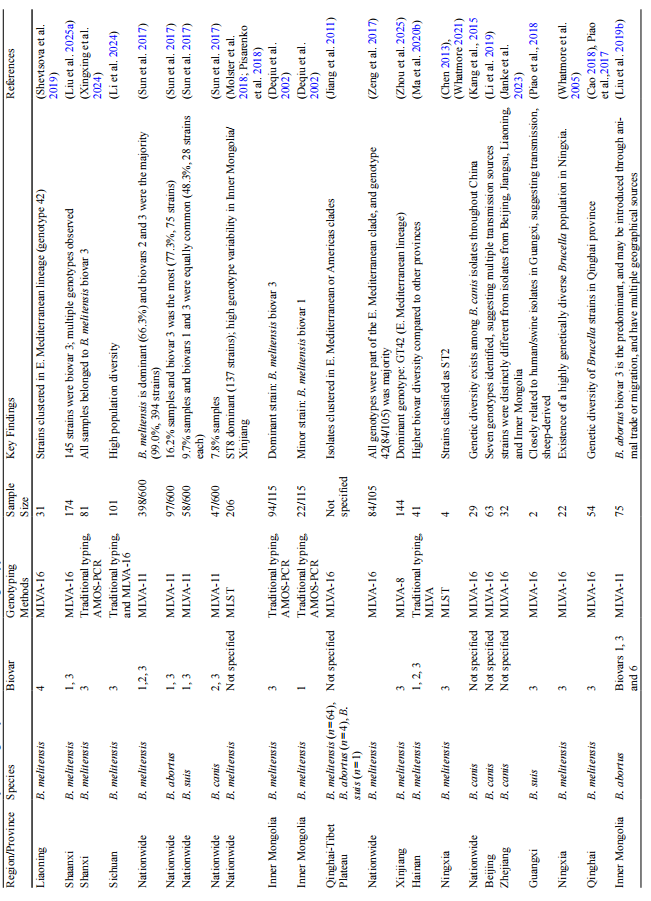
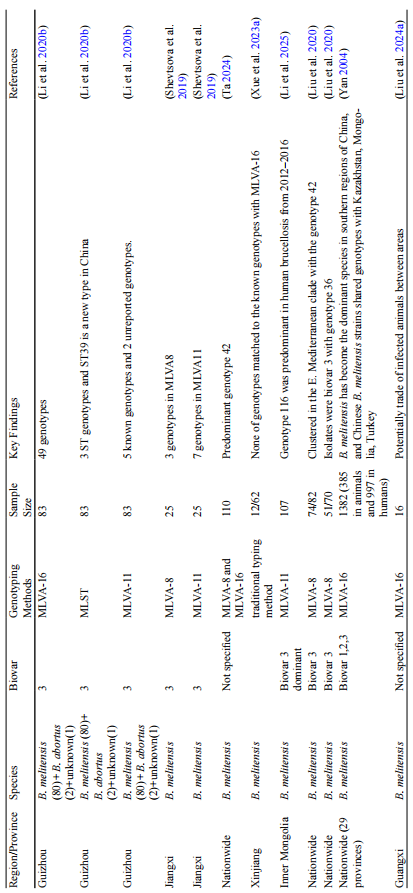
Table 2 Summary of selected studies reporting brucellosis seroprevalence in goats and sheep in China Table 3 Summary of selected studies reporting brucellosis seroprevalence in cattle and yaks in China Table 4 District‑level distribution of Brucella species isolated from livestock from 1951 to 1989, and from 1996 to 2021. Provincial‑Level Administrative Divisions (PLADs) are the 34 administrative units of China Table 5 Epidemiological profile of brucellosis in wildlife in China Table 6 Molecular epidemiological profile of MLST and MLVA genotypes in China 附件: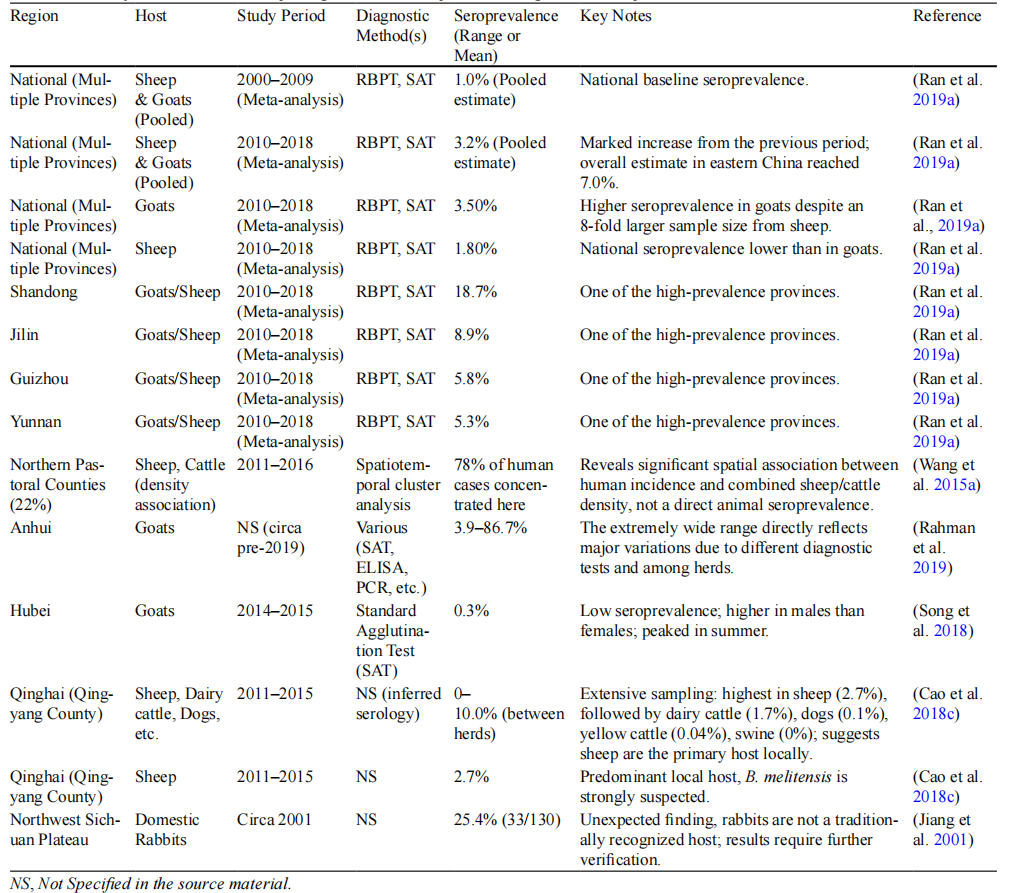
 返回列表
返回列表